Fix Youth Coach Communication With a 20 Minute Parent Meeting
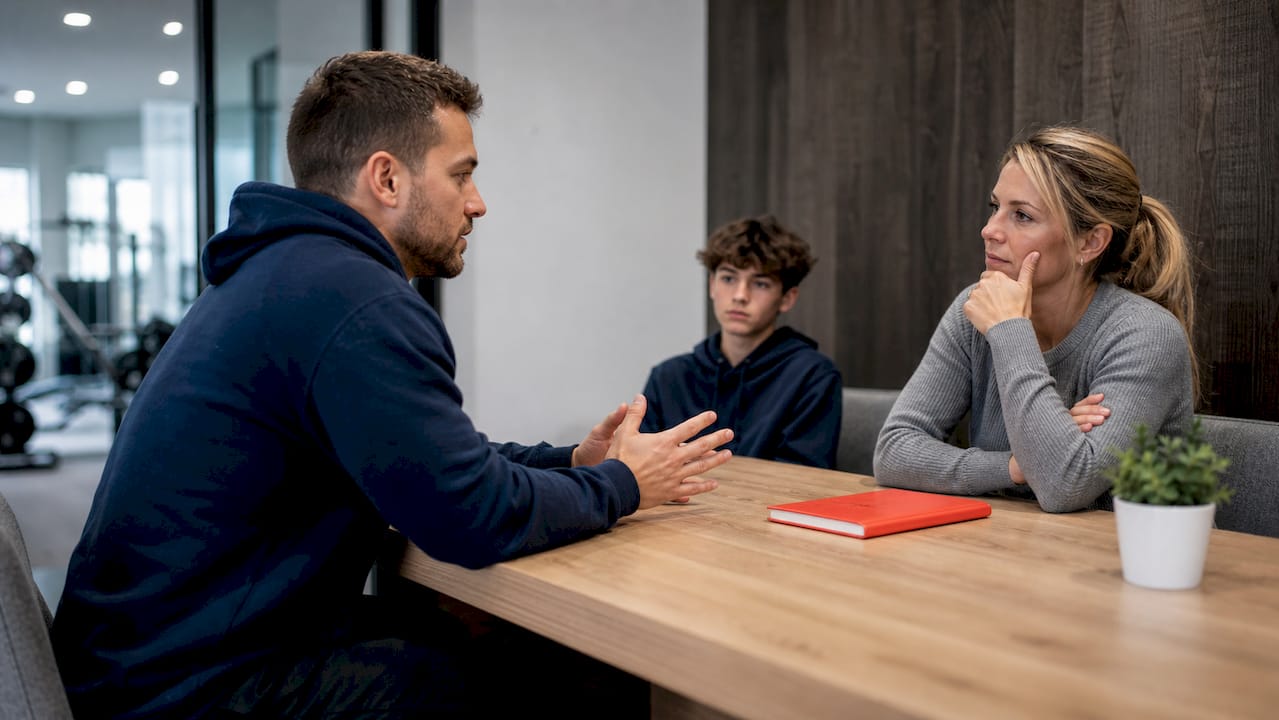
Lead with connection before correction, set clear boundaries with parents, and use a short coaching framework such as GROW for one-to-one conversations. Ground both in a 20-minute pre-season parent meeting that sets expectations before the season starts. That single habit, backed by UK Coaching guidance and reinforced through Strengthandconditioningeducation’s youth pathway prevents most of the conflict coaches spend their season firefighting.
- Conduct a mandatory pre-season parent meeting lasting 20 to 30 minutes to establish expectations and reduce season-long conflicts.
- Implement a 24-hour rule for complaints and focus communication about logistics in a weekly message, avoiding mixed feedback channels.
- Adapt communication style and pacing based on age, with clear, imagery-based instructions for under-8s, reasoning for pre-teens, and shared problem framing for teenagers.
- Use the GROW coaching model to facilitate development conversations, enabling athletes to identify goals and solutions rather than rely on direct correction.
- Limit group chat content to logistics and designate private messages for sensitive issues, setting clear boundaries and response time expectations from the start.
1Practical strategies for better youth coach communication this week
You don’t need a new philosophy to fix most communication problems in youth sport. You need five habits, applied consistently, starting now.
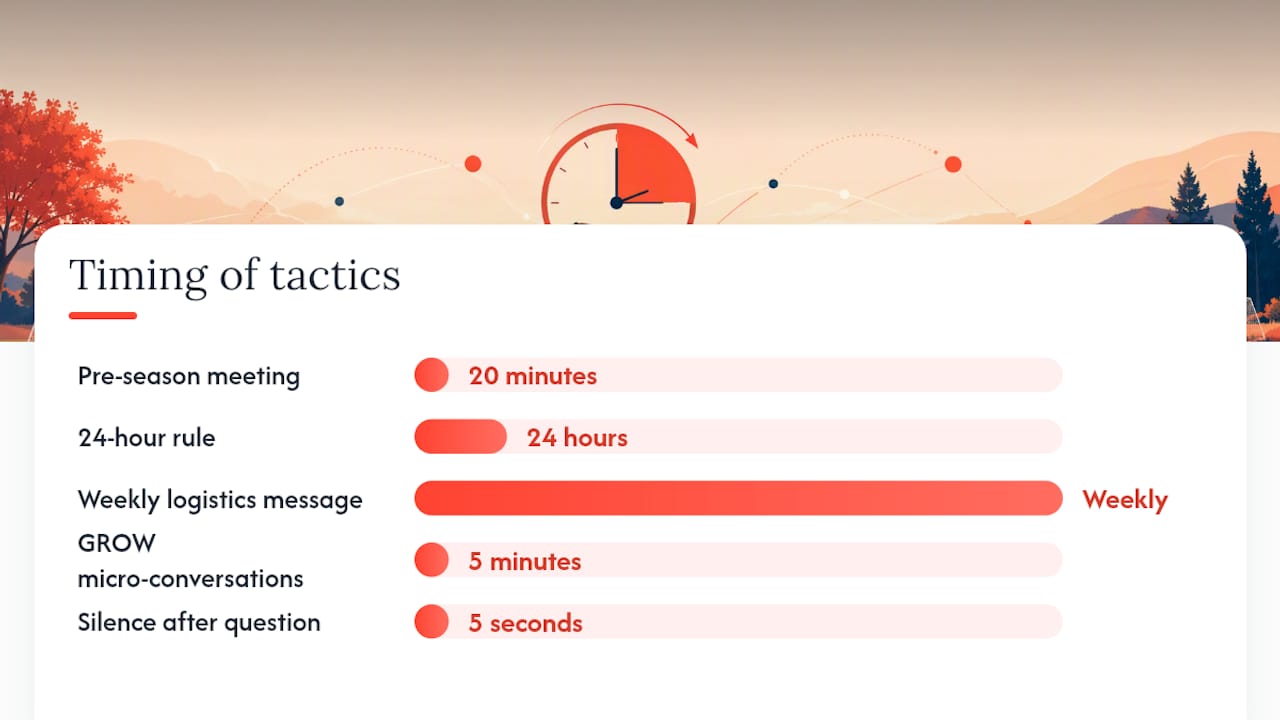
- Run a pre-season parent meeting. Twenty minutes before the first fixture removes most of the “why isn’t my child playing” messages you’ll get in October. Script: “Here’s how we’ll communicate this season, and here’s what to expect from playing time.”
- Set a 24-hour rule for complaints. Nobody, coach or parent, makes a good decision minutes after a bad result. Script: “I hear you’re frustrated. Let’s both sleep on it and talk properly tomorrow.”
- Use one weekly logistics message, nothing else. Fixtures, kit, meeting times. Keep feedback and concerns out of it entirely.
- Run 5-minute GROW micro-conversations. One question, one goal, one commitment, done at the end of training rather than mid-session.
- Ask before you tell. Try “What did you notice about that move?” before “Here’s what went wrong.”
Each tactic works because it replaces a reactive habit with a planned one. Parents and players stop guessing what’s coming next, which is where most tension in youth sport actually starts.
Hold silence after asking a question. Most coaches fill the gap after two seconds. Wait five, and the young athlete’s second answer is usually more honest than the first.
2How to run a pre-season parent meeting that prevents problems later
Invite every parent or guardian, not just the vocal ones, and keep it to 30 minutes flat. Cover these six points and you’ll field fewer mid-season queries:
- Your coaching values and what success looks like this season
- How playing time decisions get made (be specific, not vague)
- The single best way to contact you, and when
- What happens if a concern needs escalating beyond you
- Safeguarding contact details, clearly stated, every time
- Admin logistics: kit, lifts, fixtures, payment deadlines
Set the 24-hour rule here, out loud: “If something happens at a game that upsets you, give it a day before you message me. I’ll always reply within 48 hours.” That one sentence, said once to a room, saves dozens of awkward exchanges later.
3Talking to young athletes: language, pacing and body language by age
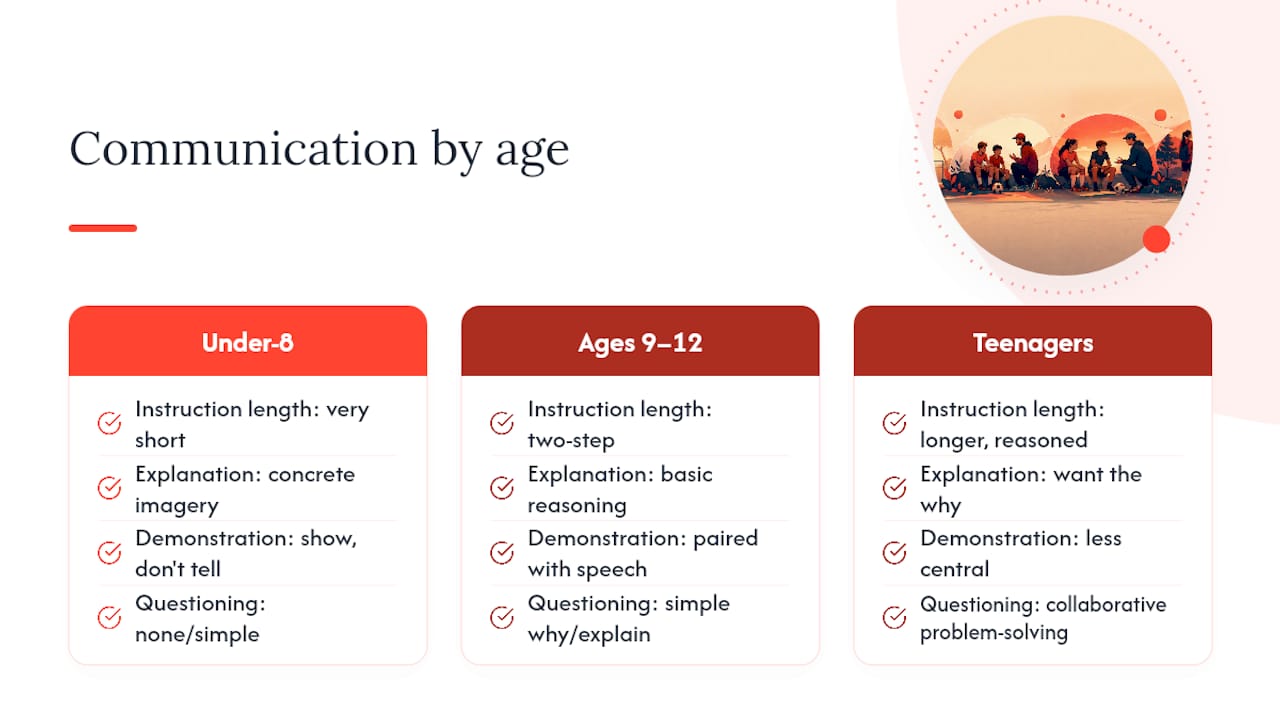
A seven-year-old and a sixteen-year-old need completely different delivery, even when the instruction is identical.
Under-8s
need short, concrete instructions tied to imagery: “Feet like a ninja,” not “improve your agility.” One idea at a time, demonstrated rather than explained.
9 to 12s
can handle two-step instructions and basic reasoning: “Move here because it opens a passing lane.” This is the age where verbal cues start outperforming pure demonstration.
Teenagers
want the why, not just the what. They’ll disengage fast from instructions that feel like commands rather than reasoning, so frame feedback as a shared problem: “What do you think we adjust here?”
Across every age group, drop your volume rather than raising it to get attention. A quieter, closer voice reads as authority; shouting reads as panic. Get eye level with younger players and watch their first response, then wait. Practitioner guidance from Positive Coaching Alliance consistently points to this pattern: the first answer is rarely the real one.
4Using GROW for one-to-one development conversations
The GROW model, Goal, Reality, Options, Will, works because it moves you from telling players what to fix to helping them find it themselves. Meta-analytic research on structured coaching interventions backs this shift: coaching frameworks produce measurable gains in learning and performance across contexts far beyond sport.
Adapted for youth athletes, each stage takes under a minute:
- Goal: “What do you want to get better at this month?”
- Reality: “What’s happening now when you try that?”
- Options: “What’s one thing you could try differently?”
- Will: “What will you do at training this week?”
A full micro-GROW conversation fits into five minutes at the end of a session, which makes it usable every week rather than as a rare set-piece. Save directive feedback, no questions, just clear instruction, for anything involving safety or technical faults that could cause injury. GROW is for development. Direct correction is for danger.
5Digital channels and boundaries: what belongs in the group chat
A 2025 survey of youth soccer parents and coaches found WhatsApp groups are the most frequently used communication channel, but not the one rated most effective. Parents also reported perceiving far less communication than coaches thought they were sending, a gap that group chats alone can’t close.
A simple policy fixes most of this:
- Group chat: fixtures, kit, weather cancellations, one message a week
- Private message or call: playing time, behaviour, individual feedback, complaints
- Never in the group: anything that could embarrass a child or a parent publicly
State your response window once, at the pre-season meeting, so nobody expects an instant reply at 9pm on a Tuesday.
6Handling difficult conversations and safeguarding concerns
Lead with empathy before you lead with facts. Positive Coaching Alliance recommends phrasing like “I understand you’re frustrated, let’s talk about how we can help your athlete improve,” which turns a confrontation into a shared problem before either side digs in.
The sequence that works: acknowledge the concern immediately, apply the 24-hour rule, meet privately rather than in the car park, and write down what was agreed. If the issue touches safeguarding, escalate to your club’s designated safeguarding lead straight away and follow your club’s own policy to the letter. This article offers communication practice, not legal guidance.
7How YouthSCA supports coaches with structured communication training
We build these tactics into The YSCA Pathway, pairing NSCA-endorsed content with lifetime resource access and tutor support. Coaches get practical templates, not just theory, plus a peer network to test scripts before using them on a real team. Expect structured feedback loops and coaching tools you can apply the same week you learn them.
8Sources
The GROW model provides the coaching framework structure. Positive Coaching Alliance supplies practical parent scripts. UK Coaching covers relationship-building fundamentals, and the 2025 parent-coach communication survey grounds the digital channels guidance in real data.
